Constraints, scoping decisions, commitments and the Environmental Statement
Your team records the constraint scan, the scoping decisions, the commitments and the chapters as the assessment goes on, and the artificial intelligence works from that record.

Constraints from the site boundary
Scan the boundary against designation and receptor layers before scoping starts.
Import the site boundary (the red line) or draw it on the map. The scan lists every designated site and receptor around it with its distance and zone of influence, so scoping starts from a complete picture, and it runs again when the boundary changes.
Screening and scoping decisions
Record the screening outcome with its legal basis, then decide each topic with its evidence.
The screening outcome is recorded with the provision it was made under. For scoping, the platform recommends a treatment for each topic from the consenting regime and the project facts, and a specialist confirms or overrides it with a reason.
Assessment registers and project controls
Every register sits on the same project record, and each row links to the document and chapter it came from. Artificial intelligence proposes rows for a specialist to accept, and any register can be exported for issue or published to SharePoint.
Assessment registers
- Constraints
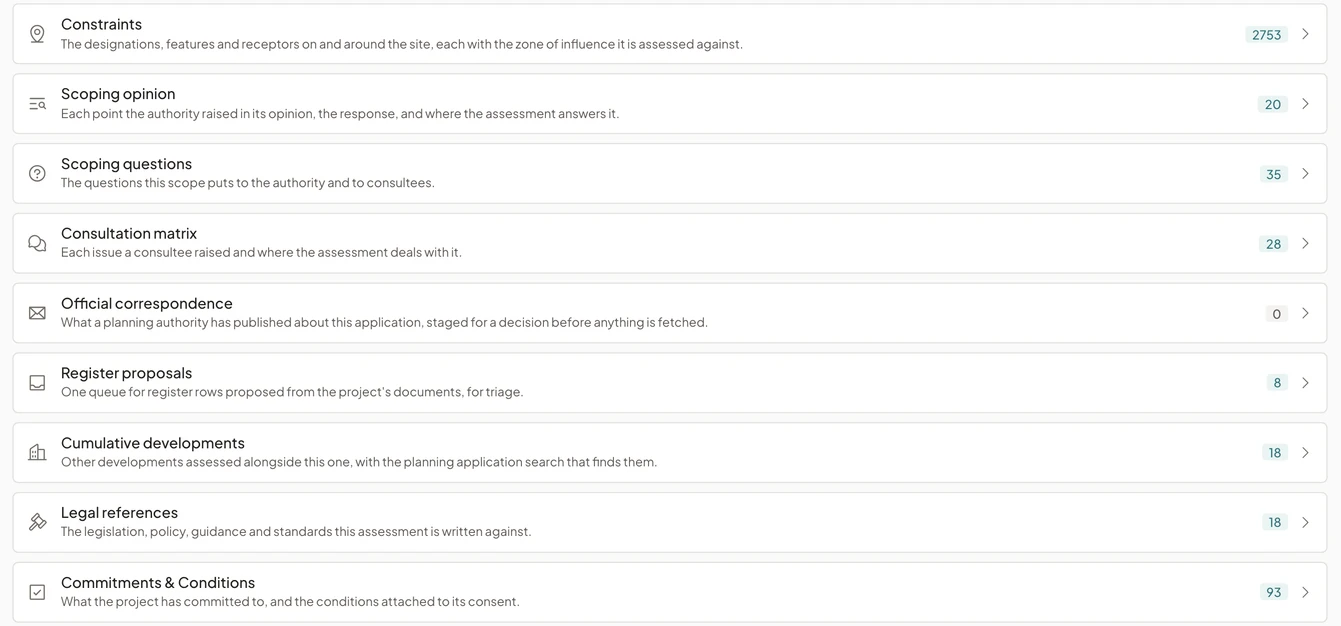
- The designations, features and receptors around the site, each with the zone of influence it is assessed against.
- Scoping opinion
- Each point the authority raised in its opinion, the response, and where the assessment answers it.
- Scoping questions
- The questions the scope puts to the authority and to consultees.
- Consultation matrix
- Each issue a consultee raised and where the assessment answers it.
- Official correspondence
- What the authority has published about the application, kept with the project record.
- Register proposals
- Rows proposed from the project’s documents, for a specialist to accept.
- Cumulative developments
- Other developments assessed alongside this one.
- Legal references
- The legislation, policy, guidance and standards the assessment is written against.
- Commitments & conditions
- What the project has committed to, and the conditions attached to its consent.
- Mitigations
- The measures that avoid or reduce effects, each linked to the commitment behind it.
Project controls
- Requirements
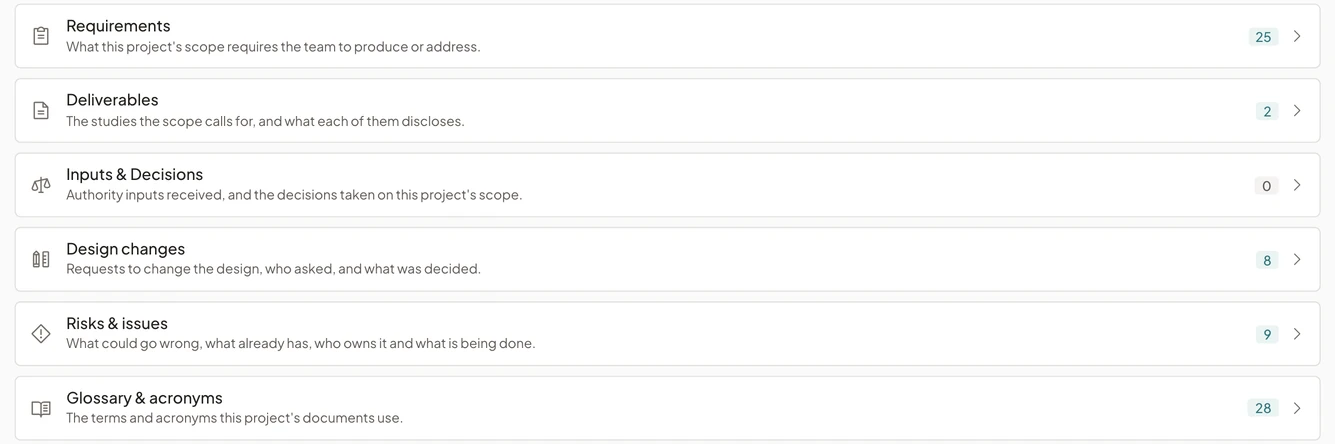
- What the scope requires the team to produce or address.
- Deliverables
- The studies and reports the scope calls for, with their status.
- Inputs & decisions
- Authority inputs received, and the decisions taken on the scope.
- Design changes
- Requests to change the design, who asked, and what was decided.
- Risks & issues
- What could go wrong, what already has, and who owns it.
- Glossary & acronyms
- The terms the project’s documents use, kept consistent across chapters.
Commitments and consultation
Commitments are proposed from the chapters with the quoted sentence and its page or paragraph, and a specialist accepts each one.
The platform reads the chapters and proposes each commitment with the sentence it came from, and a specialist accepts or dismisses it. The commitments register and the consultation matrix are complete when the statement is submitted, with nothing retyped from the chapters.
The Environmental Statement
Chapters follow the structure the consenting regime requires and list the checks still outstanding.
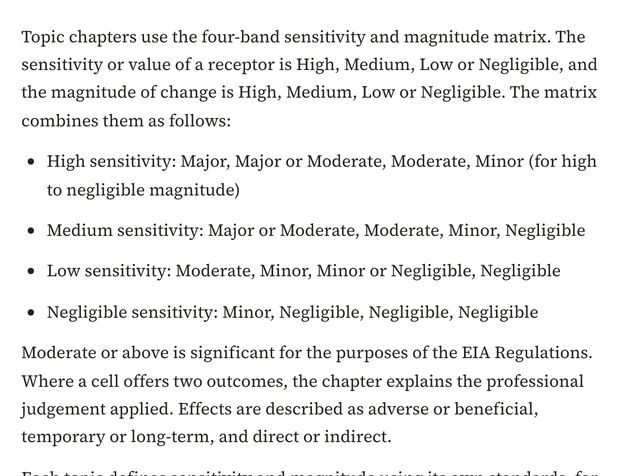
Draft sections from the project’s sources with Draft with AI, check their claims with Review with AI, then submit the report for review. Once it is approved, export it to Word or PDF in your own template. In other regimes the deliverable is the environmental and social impact assessment report, and the chapter structure follows that regime’s rules.
Programme and progress reports
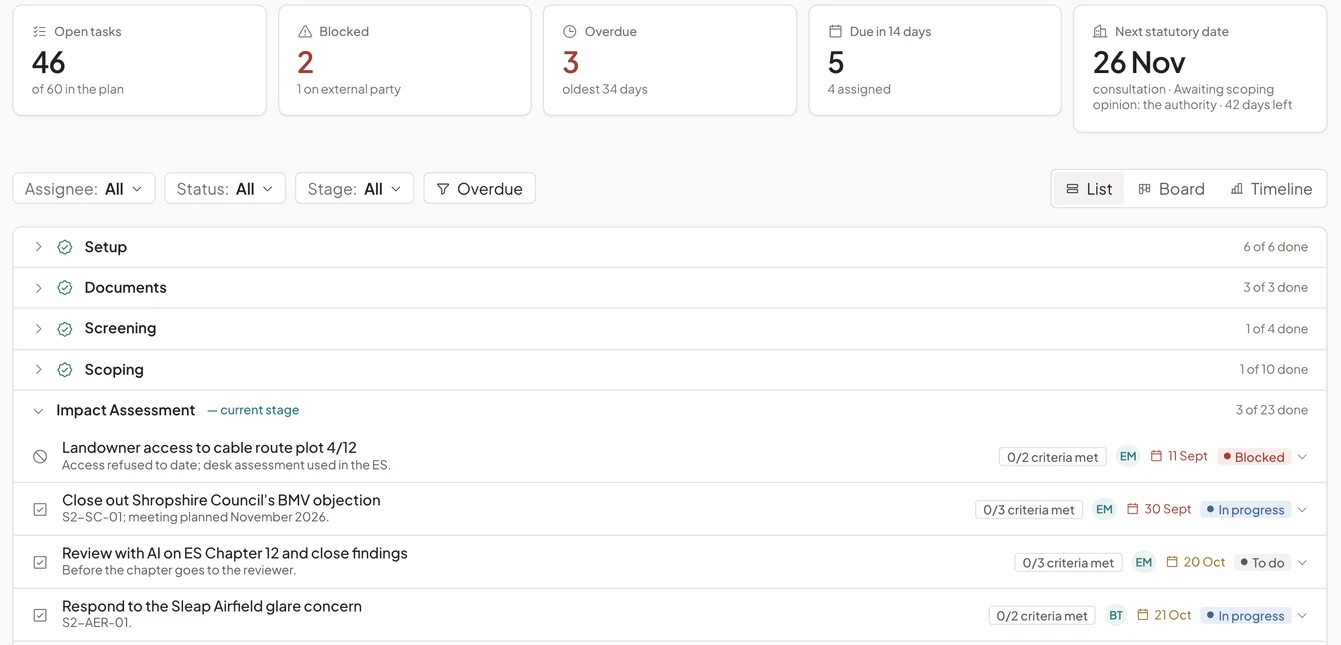
Track the assessment against its statutory dates and report to the client from the record.
Progress reports are counted from the project record and approved before they are issued, so the figures the client sees are the figures the team is working to.
Regulatory coverage
A curated pack for each consenting regime and lender standard, with new jurisdictions and frameworks added as a pack, without new software.
A regulatory pack holds the regulations, guidance, screening thresholds, report structure and checks for one consenting regime or one lender standard, curated and reviewed by practitioners. The platform applies the pack for the project’s jurisdiction to screening, scoping, drafting and review, and each requirement cites its source.
- Available now. England, for the planning route and for nationally significant infrastructure. The Republic of Ireland. The International Finance Corporation Performance Standards, the Equator Principles, the Common Approaches of the Organisation for Economic Co-operation and Development, and the World Bank Group Environmental, Health and Safety Guidelines.
- In review. Scotland, Wales and Northern Ireland. Tanzania. Australia, at Commonwealth level and for Western Australia. Habitats Regulations Assessment, Strategic Environmental Assessment and marine licensing.
Independent review
Reviewing a submitted assessment for a lender, a regulator or an operator.
Independent reviewSee EcoSphere in a demo
Follow an assessment through to an approved Environmental Statement.
We show source checks, chapter review and the approved export on a fictional project, then talk about your consenting regime and how your team works.